Showing posts with label Jewish culture. Show all posts

Thursday, November 22, 2018

Tykocin, Podlasie, Poland.

Tickling Tykocin. Tykocin (pronounced ti-ko-chin) is a village/town in Podlasie on the lovely Narew river. It was once a thriving town of around 4,000 people and half of this was a Jewish shtetel (the West side of town). You can read more about them here. After the war, as one can imagine, this town had lost a great many of its population. The Baroque style synagogue is one of the best preserved in Poland and is from the mid 17th Century. It has a tragic history, like much of Poland, but today the town is growing back into a tourism location based on Jewish past as well as the surrounding nature.

The second building with a low roof was a typical shape of a Jewish merchant house in Poland around the 18th/19th Century. You can see these buildings all over Poland, especially in the towns of Podlaskie


The view from the window of our restaurant Galeria Sztuki i Smaku "Opowieści z Narwi "

A podpiwek (pre-beer, meaning a non-alcoholic fermented drink) it is often made as part of the beer making process.

Fried river white bait
Pike with a herb sauce and buckwheat

Perch on spinach

Amazing fresh water lobster pasta!
The bridge over the Narew


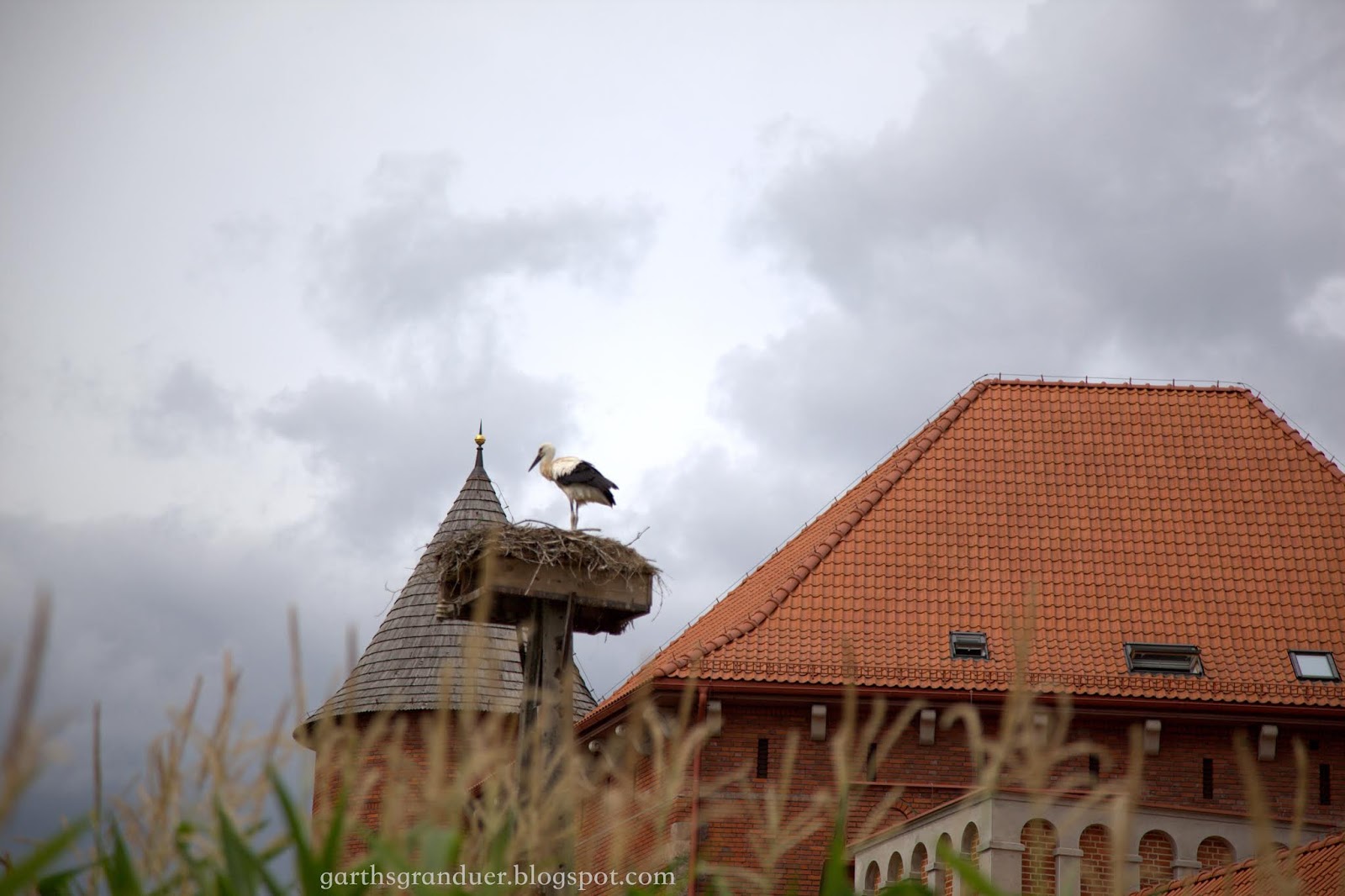
The "fake" castle as some locals call it. A re-built castle run as a hotel and function centre based on an original castle that once stood there.

A symbol of the area, the white stork migrates to Podlaskie every year to have babies and then return southwards.


The aforementioned synagogue 

It still needs a little love.
The fields around the area were full of hay bales. Always a fun photograph.

Sunday, July 28, 2013

Plac Grzybowski

I have visited the central area of Warsaw more recently as we have had some visitors from Poland and abroad. One friend asked me to take some photos to show the transformation of the area. I thought it would be a good idea to show how it did look 
when I visited it some years ago after its original transformation and then now. 

The first picture is from the original visit when they commenced working on the building on the right. Then of course, following is what we have now.

How it was

How it is now.


 You can play in the ponds


Two symbols of Polish oppression